CJC-1295 DAC / no DAC
The attachment to albumin changes the molecule’s time in circulation. A shortened name can erase the feature that made the long-acting experiment possible.
Albumin binding in CJC-1295 DAC
DAC stands for Drug Affinity Complex. In this design, a chemical handle allows the peptide to bind covalently to circulating albumin, a normal blood protein. “Covalent” describes a firm chemical bond. The 2005 rat and cell-free work tested this albumin-conjugate design and resistance to enzymatic breakdown.
The solution’s chemical specificity wins my admiration. Four amino-acid substitutions help resist degradation; albumin binding adds a further way to extend circulation. They are distinct design features, and the full form name tells us which experiment is relevant.
Modified GRF 1-29
The short-acting form commonly called CJC-1295 no DAC is Modified GRF (1-29). It retains the four stabilizing substitutions while lacking the albumin-binding design. The research context describes its action in the minutes-to-hours range, compared with days for DAC.
An account sometimes quotes a multi-day finding and names only “CJC-1295”. I distrust that elision of the form name. Resolving that ambiguity comes before interpreting the reported duration. No-DAC material cannot simply inherit the pharmacokinetic measurements from a DAC study.
CJC-1295 half-life and IGF-1 duration
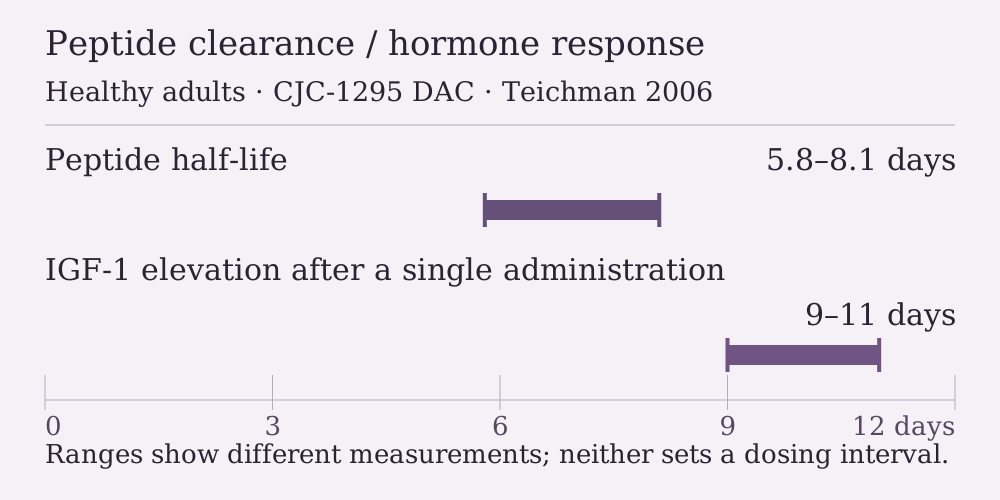
In the healthy-adult DAC studies, estimated CJC-1295 half-life was 5.8–8.1 days: the interval over which the circulating peptide amount falls by half. After a single administration, IGF-1 was elevated for 9–11 days. These are measurements of different things.
After multiple experimental administrations, IGF-1 remained above baseline up to 28 days. That separate finding cannot be substituted for the peptide’s half-life. Separating the peptide measurement from its downstream hormone response helps me avoid confusing the two.
The safety questions concern the consequences of that stimulation. The immune question concerns possible recognition of the administered peptide. Duration alone settles neither.